What is SCORM?
Introduction
As digital learning continues to grow, educational publishers and training organizations need a reliable way to deliver interactive learning content across different Learning Management Systems (LMS).
One of the most widely adopted standards is SCORM (Sharable Content Object Reference Model).
Whether you're a publisher converting textbooks into digital learning, a corporate training provider, or an educational institution, understanding SCORM can help you create reusable and trackable learning experiences.
What is SCORM?
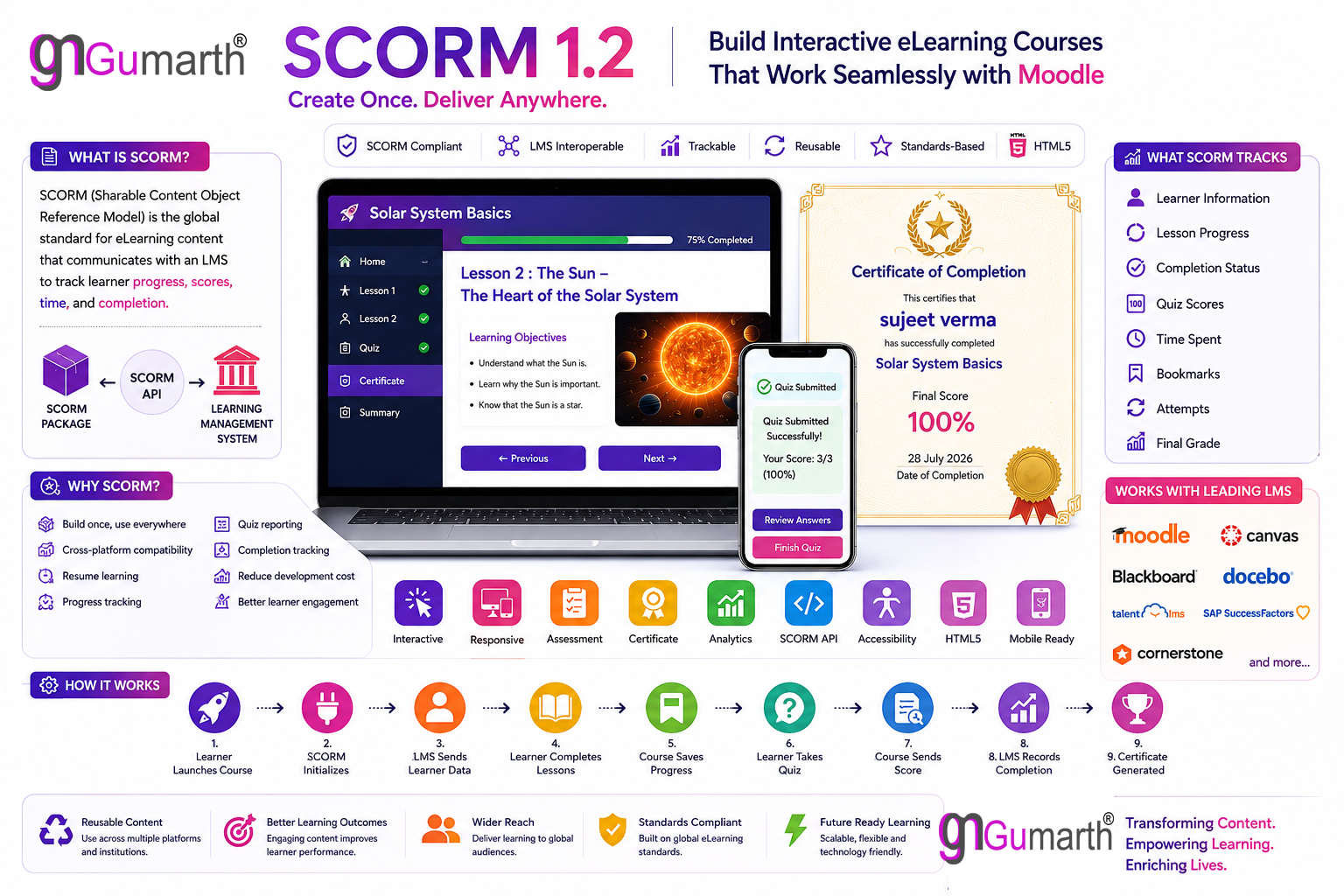
SCORM is an international technical standard for packaging and delivering eLearning content.
A SCORM package is typically distributed as a ZIP file containing:
- HTML pages
- JavaScript
- Images
- Videos
- Audio
- Assessment files
- imsmanifest.xml (the course manifest)
When uploaded into a compatible LMS, the course communicates with the platform using the SCORM API.
What Does SCORM Track?
A SCORM-compliant LMS can record valuable learner information, including:
- Learner Name
- Learner ID
- Lesson Progress
- Completion Status
- Quiz Scores
- Time Spent
- Bookmark Location
- Resume Learning
- Attempts
- Final Grade
This allows organizations to measure learner engagement and performance.
Why Publishers Should Use SCORM
Publishers are increasingly transforming traditional educational content into interactive digital learning.
Instead of distributing only PDF or EPUB files, SCORM enables publishers to deliver:
- Interactive lessons
- Embedded videos
- Knowledge checks
- Quizzes
- Certificates
- Progress tracking
- Learning analytics
A single SCORM package can be reused across multiple LMS platforms, reducing redevelopment effort.
Benefits of SCORM
Cross-Platform Compatibility
Build once and deploy on multiple SCORM-compatible LMS platforms.
Learning Progress Tracking
Track exactly where learners stopped and allow them to resume later.
Assessment & Reporting
Automatically report quiz scores and completion data to the LMS.
Standardized Content Delivery
Maintain a consistent learning experience across institutions and organizations.
Reduced Development Cost
One course can serve many different LMS environments.
How Does SCORM Work?
The interaction between the course and LMS follows a simple workflow:
Learner Launches Course
?
SCORM Initializes
?
LMS Sends Learner Information
?
Learner Completes Lessons
?
Course Saves Progress
?
Learner Takes Quiz
?
Course Sends Score
?
LMS Records Completion
?
Certificate Generated
Typical SCORM Features
A modern SCORM course may include:
- Interactive lessons
- Videos and animations
- Audio narration
- Assessments
- Certificates
- Bookmark & Resume
- Progress indicators
- Learning analytics
- Responsive HTML5 design
How to Build a SCORM Course
A typical development process includes:
- Design the learning content.
- Create responsive HTML5 lesson pages.
- Add interactive elements such as videos and quizzes.
- Implement the SCORM API to communicate with the LMS.
- Track learner progress, quiz scores, and completion status.
- Create the imsmanifest.xml file.
- Package everything into a SCORM ZIP.
- Upload and test the package in an LMS such as Moodle.
Why Moodle?
Moodle is one of the world's most popular open-source Learning Management Systems.
It provides:
- Course management
- User enrollment
- Gradebook
- Activity completion
- Reporting
- Certificates (through plugins)
- SCORM support
This makes Moodle an excellent platform for testing and deploying SCORM courses.
How Gumarth Solutions Can Help
At Gumarth Solutions, we specialize in digital content transformation and interactive learning solutions.
Our expertise includes:
- SCORM 1.2 course development
- HTML5 interactive learning
- EPUB3 development
- Accessible digital publishing
- PDF to SCORM conversion
- Learning content modernization
- Quiz and assessment development
- Moodle-compatible course packaging
Whether you're an educational publisher, corporate trainer, or institution, we can help transform static content into engaging, standards-compliant digital learning experiences.
Conclusion
SCORM remains one of the most reliable and widely supported standards for eLearning content delivery. By enabling interoperability, learner tracking, and reusable content, it helps publishers and organizations create learning experiences that work seamlessly across multiple LMS platforms.
As digital learning continues to evolve, investing in standards-based content ensures greater flexibility, wider compatibility, and a better experience for learners.
Comments
No comments yet. Be the first!